Home > Products > Passive Fire Protection > Fire Stopping
Fire stopping seals the gaps and openings where pipes, cables and ducts pass through fire-resisting walls and floors, so that a fire cannot spread from one compartment to the next through these hidden routes. Every service penetration is a potential weak point in a building’s fire compartmentation, and fire stopping restores the fire resistance of the wall or floor around it. It is a fundamental part of passive fire protection. MEP provides fire stopping to fire-resisting standards across the UK.
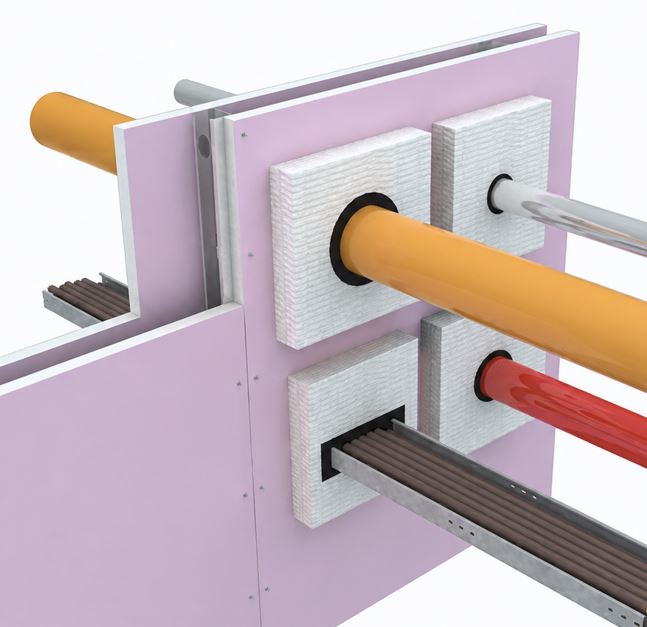
When a wall or floor is built to resist fire for a given period, any hole made through it for services would let fire and smoke pass unless it is properly sealed. Fire stopping uses tested products, such as intumescent sealants, collars, wraps, fire batt and mortar, chosen to suit the size of the opening and the services running through it. Many products are intumescent, meaning they expand in heat to close the gap left as pipes or cables burn away, maintaining the fire resistance of the barrier.
Fire stopping only works if the correct, tested products are installed correctly, and this has come under close scrutiny with the introduction of the Building Safety Act. Systems should be tested to the relevant standards and, ideally, installed by third-party certified operatives, with the work properly recorded so it can be inspected and verified. We survey the penetrations, specify the right tested solution for each one, install to the appropriate standard, and document the work so your compartmentation is both effective and demonstrably compliant.
Get in touch with our team of fire suppression experts to discuss your requirements and receive a tailored solution.
The sealing of gaps and openings around pipes, cables and ducts where they pass through fire-resisting walls and floors, to stop fire spreading between compartments.
Every unsealed service penetration is a route for fire and smoke to bypass a fire-resisting wall or floor, defeating the building’s compartmentation.
Tested products such as intumescent sealants, collars, wraps, fire batt and mortar, selected to suit each opening and the services passing through it.
It describes a material that expands when heated, closing the gap left as pipes or cables burn away and maintaining the fire resistance of the barrier.
It should use tested systems and, ideally, third-party certified installers, with the work documented so it can be inspected and shown to be compliant.
Some other offerings by MEP that you might be interested in.