Fire Protection Sprinkler Systems

Automatic sprinkler systems are the most widely used and best proven form of fire protection, controlling or extinguishing a fire in its early stages and buying vital time for people to escape and for the fire service to respond. Contrary to a common belief, sprinklers do not all go off at once: only the heads directly over the fire operate, limiting both fire and water damage. MEP designs, supplies and installs fire protection sprinkler systems for commercial, industrial and residential buildings across the UK.

How sprinkler systems work

Each sprinkler head is held closed by a heat-sensitive element, usually a glass bulb, that bursts at a set temperature. When a fire raises the temperature at ceiling level, only the head or heads immediately above it open and discharge water directly onto the fire. This targeted response controls the fire quickly while a fire alarm and, in many systems, a signal to a monitoring centre are raised. The great majority of fires that start in a sprinklered building are controlled by just one or two heads.

Choosing the right sprinkler system

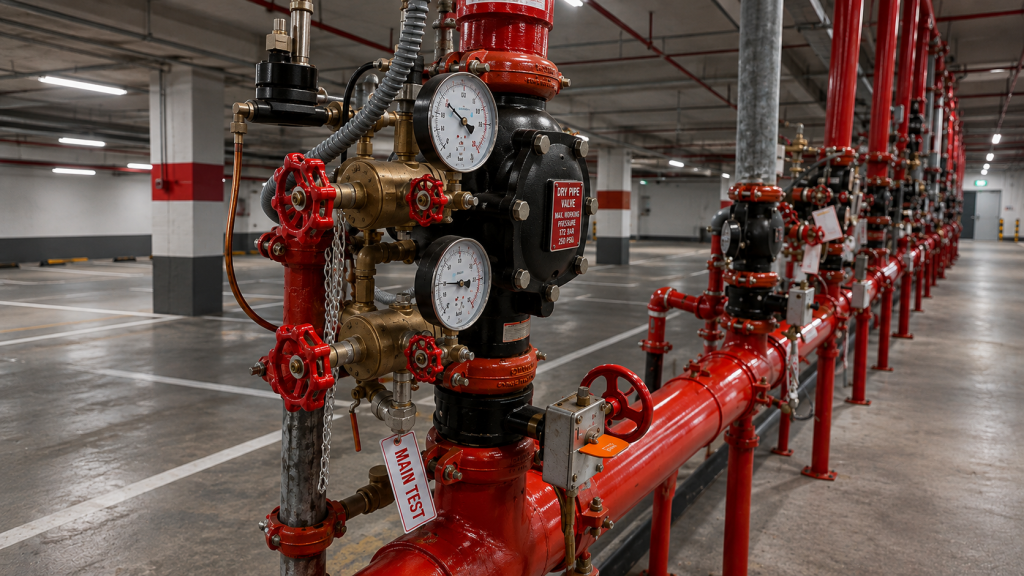
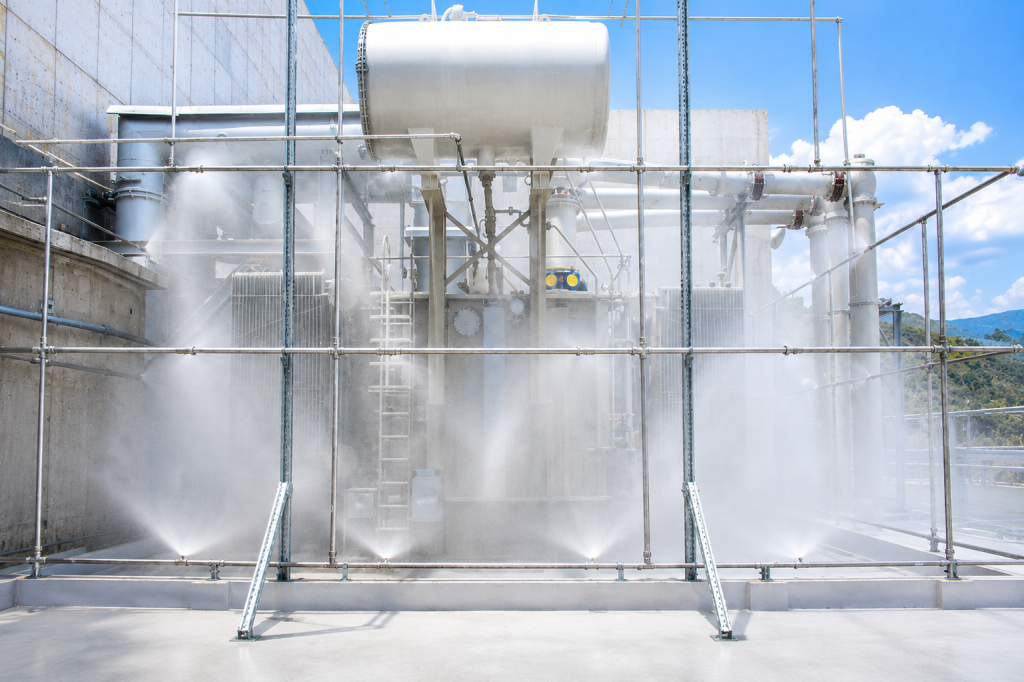
Sprinkler systems come in several types to suit different buildings and risks: wet pipe for standard heated premises, dry pipe for areas that can freeze, pre-action where accidental water discharge must be avoided, and deluge for high-hazard risks. The right choice depends on the building, the contents and the environment. We design to recognised standards such as BS EN 12845 for commercial and industrial systems and BS 9251 for residential, and handle supply, installation and commissioning throughout.

Ready to Protect Your Facility?

Get in touch with our team of fire suppression experts to discuss your requirements and receive a tailored solution.

Frequently Asked Questions

No. Only the heads directly above the fire operate. Most fires in sprinklered buildings are controlled by one or two heads, which limits water damage.

Each head is held shut by a heat-sensitive glass bulb or link that bursts at a set temperature, allowing water to flow only where the heat from a fire is present.

The main types are wet pipe, dry pipe, pre-action and deluge, each suited to different buildings, contents and environments.

Commercial and industrial systems are typically designed to BS EN 12845, and residential and domestic systems to BS 9251.

Far less than an uncontrolled fire or fire brigade hoses. Because only the heads over the fire operate, sprinklers use much less water than firefighting would.